
Macroeconomic data announcements, global trends and trading activity of foreign investors would be major driving factors for market movement this week, analysts said. Unabated capital infusion by domestic institutional investors have supported the positive trend in the stock market last week, traders said.

'The day that the market realises that they've overspent (on AI) and there's a sudden collapse in the capex, then India can start outperforming again.'

The Bank of India has decided to hike the interest rates on foreign currency non-resident deposits denominated in dollar, sterling pound and euro from July 9, 2003.

The Reserve Bank of India (RBI) has allowed banks to grant need-based working capital loans to manufacturers using gold as raw material, extending the provision currently available only to jewellers. Banks are generally prohibited from lending for the purchase of gold/silver in any form, or lending against the security of primary gold/silver.
The US Federal Reserve has announced to maintain its bond purchase tapering programme.
Three years after IDBI became a bank, Yogesh Agarwal, bank's third chairman and managing director in as many years, is trying to put the pieces in place. After all, as he pointed out in an interview with Business Standard, the erstwhile development financial institution is grappling with a unique situation, where IDBI and the two commercial banks it acquired since 2005 offer loans at different interest rates.

Suryakumar Yadav discusses his successful partnership with head coach Gautam Gambhir, highlighting their shared understanding and mutual respect, which has led to significant success for the Indian T20 team.

The core inflation is down and there is a need to push growth.

Equity benchmark indices Sensex and Nifty rebounded sharply by nearly 1 per cent on Monday, driven by strong buying in power, banking, and financial stocks.
Inflation in India is going to be a persistent problem.

After a big loss, teams often give excuses instead of honestly admitting they played badly.

The automobile sector is considered a good indicator of economic health. It has a very long value chain, from primary materials, like metals, glass and plastic, to value-added high-end electronic components, specialised alloys, and software.

'The US reciprocal tariff has added another element of uncertainty and the central bank may prefer to wait and get further clarity.'

The repo rate cut by 25 basis points by the monetary policy committee (MPC) of RBI announced Friday will give a long-awaited relief on interest rates and also be supportive of economic growth, according to experts. Repo rate is the interest rate at which the RBI lends money to commercial banks.

Overlap refers to the same stocks appearing across fund portfolios.
In an event-heavy week, stock investors will track ongoing quarterly earnings, the US Federal Reserve's interest rate decision, and macroeconomic data for market direction, analysts said. Moreover, progress in India-US trade negotiations will remain a key focus for investors, an expert said.

After the last Budget's announcement of a major tax relief for those earning an annual salary of less than Rs 12 lakh, there is not much that individuals can look forward to in the forthcoming Budget, points out A K Bhattacharya.

RBI has been on a rate hike spree since March 2010.
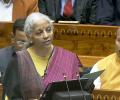
Budget 2026 sticks to fiscal discipline, shuns populist measures despite five key state elections coming up, but ends up rattling stock markets with a higher transaction tax on derivatives trading.

The RBI has flagged concerns over rising volatility in gold prices and advised lenders to exercise caution in the gold loan segment.
Banking sector veteran N C Vaghul says that the finance minister's step is neither positive nor regressive. He feels that banks and the finance ministry need to find a middle path. \n

Who do you think should be part of India's playing XI for the must-win match against Zimbabwe on Thursday?

Fitch Solutions sees RBI keeping benchmark interest rates unchanged during the fiscal to March 2022 following its decision to buy Rs 1 lakh crore of government bonds. "We had initially expected another policy rate cut to arrest the rise in government bond yields since the Union Budget announcement in February. "However, having an explicit bond purchase guidance from the RBI following the announcement of the G-SAP will also achieve a similar effect, if not even be more effective than a rate cut on capping the increase in bond yields," it said in a note. The Reserve Bank of India (RBI) held its policy repurchase (repo) rate unchanged at 4 per cent at its monetary policy meeting on April 7.

The Shree Ram Twistex IPO enters Day 3 with strong investor interest. Check latest GMP, subscription status, price band, company fundamentals, and expert review to decide whether to apply.

Commerce and Industry Minister Piyush Goyal announced that an interim trade agreement between India and the US is likely to be signed in March and operationalised in April, with chief negotiators meeting in Washington to finalize the details.

Karnataka Chief Minister announces a ban on social media for children under 16 and increased measures to prevent drug abuse in schools, colleges, and universities, alongside investments in education infrastructure and mental health support.

rediffGURU T S Khurana answers readers' personal income tax queries

'For those in for the long haul, this is a God-given opportunity.' 'Your market is falling despite strong fundamentals, and such a clear roadmap has been announced.'

Home purchase affordability has improved in the first half of calendar year (CY) 2025, after the RBI reduced the repo rate by 100 basis points (bps), according to real estate consultancy Knight Frank India.

'My concern is that, although everything is expressed in monetary terms, you are effectively combining values that have been adjusted using different price measures.'

A pickup in freight rates, rising fleet utilisation and a long-awaited replacement cycle are breathing fresh life into India's commercial vehicle (CV) market, strengthening the investment case for Tata Motors' CV arm (TMCV). Despite a broadly steady December quarter (Q3) performance, brokerages remain divided on whether the upswing is strong enough to offset margin pressures.
A Kerala court has awarded damages of Rs five lakh to a retired army officer for malicious prosecution by the police.

Interest rates may harden a bit by the end of the current financial year, according to C Rangarajan, chairman of the Prime Minister's Economic Advisory Council.

As deposit growth lags credit expansion, Indian banks face shrinking low-cost Casa inflows, rising funding costs, and structural shifts driven by UPI, e-Kuber, and digital savings trends, points out Tamal Bandyopadhyay.

'LIC will reduce but not fully exit its stake in IDBI Bank, which remains an important bancassurance partner,' says LIC of India' MD and CEO R Doraiswamy.
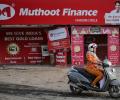
Shares of gold finance companies Muthoot Finance and Manappuram Finance hit their respective all-time highs, gaining on the BSE during Wednesday on expectation of healthy earnings. In comparison, the benchmark BSE Sensex was down 0.14 per cent, closing at 85,408.

Israel has for more than two decades and several US presidencies worked to draw the United States into a full-scale war with Iran. Having finally achieved that, the last thing it wants is Trump declaring victory and going home, as he is prone to do. Ali Larijani was the figure most capable of handing Trump a negotiated exit with something to show for it. Without Larijani, the road to an exit gets considerably narrower. Prem Panicker continues his must read daily blog on the Gulf War.

The absence of any recovery in investment is underlined by the capital goods sector.

If you are actively trading, you can't possibly overlook headlines. Early announcements, policy changes, or even a disruption in a certain industry habitually grab your attention. These headlines, when strategically assessed, can generate profitable trading ideas.
